
A Faster Way to Handle Restaurant Supplier Ordering and Track Discounts
The Hidden Cost of Restaurant Supplier Ordering
For many restaurant and bar owners, the workday doesn’t end when the last guest leaves. After service comes the quiet but time‑consuming routine of administrative work: checking inventory, preparing supplier orders, scanning emails for promotions, and comparing prices across vendors.
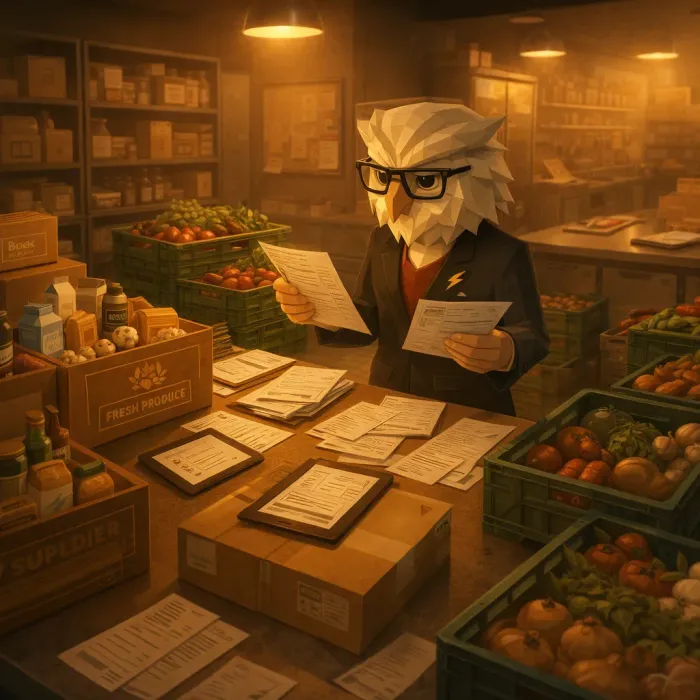
This nightly routine is often where hours disappear. A typical kitchen might work with several suppliers—produce, beverages, dry goods, specialty ingredients—and each one sends different order forms, emails, and discount updates. Restaurant supplier ordering quickly turns into a fragmented process spread across spreadsheets, WhatsApp messages, email threads, and handwritten notes.
The result is predictable: missed discounts, rushed orders, and unnecessary spending.
Improving restaurant supplier ordering doesn’t require major operational change. Often, the fastest gains come from simply centralizing the process and making discounts visible across all suppliers in one place.
Why Supplier Discounts Often Go Unused
Most suppliers offer promotions regularly. Seasonal ingredients, surplus stock, or short-term campaigns can create significant savings opportunities.
Yet many restaurants rarely benefit from them fully. The issue isn’t a lack of discounts—it’s visibility.
Common problems include:
• Promotions arrive through different channels: email newsletters, PDFs, messaging apps, or account managers
• Discounts expire quickly and get buried in daily communication
• Orders are placed manually without comparing supplier offers
• Kitchen teams focus on availability rather than price optimization
In practice, that means chefs and managers often order what they normally order without realizing that a supplier is offering the same product at a lower price that week.
Over time, these missed opportunities accumulate into meaningful cost increases.
A Smarter Way to Manage Restaurant Supplier Ordering
A more efficient approach is to treat supplier ordering and discount tracking as a single connected workflow rather than two separate tasks.
When restaurant supplier ordering is centralized, several improvements become possible:
Unified supplier overview
Instead of checking each supplier individually, all vendors appear in one system. Product availability, pricing, and active promotions become visible in a single interface.
This immediately removes the need to jump between emails, websites, and order sheets.
Automatic discount visibility
When discounts are tracked automatically, they can be surfaced directly during the ordering process. Rather than searching for promotions, the system highlights them while building an order.
For example:
• A produce supplier offering discounted tomatoes this week
• A beverage distributor running a limited promotion on craft beer
• A dry goods vendor reducing prices on bulk rice or pasta
Seeing these discounts at the moment of ordering allows kitchen managers to make quick cost‑saving adjustments.
Faster ordering workflows
When inventory levels are already tracked digitally, orders can be generated from real stock data rather than rough estimates.
Instead of asking:
“What do we think we need tomorrow?”
The process becomes:
“What is actually running low, and which supplier currently offers the best option?”
This shift alone can save hours each week in back‑office work.
The Role of Inventory in Smarter Ordering
Inventory tracking is the foundation of efficient supplier ordering. Without accurate stock data, even the best supplier system cannot prevent overordering or missed opportunities.

An integrated inventory manager—like the role represented by Ivy in the Kitchen Crew system—helps kitchens maintain a real-time overview of ingredients, usage, and upcoming needs.
This makes it possible to:
• identify products that should be reordered immediately
• detect slow-moving stock before it expires
• adjust orders based on current promotions
• avoid unnecessary duplicate purchases
When inventory and ordering work together, the system begins to guide purchasing decisions rather than simply recording them.
Reducing the Late-Night Back Office Routine
One of the biggest benefits of improving restaurant supplier ordering is time.
Restaurant owners and managers often handle administrative tasks late at night, after a full service. Ordering supplies across multiple vendors, checking invoices, and comparing prices can easily add another hour—or more—to an already long day.
By simplifying ordering workflows and automatically tracking supplier discounts, much of this work becomes faster and more predictable.
Instead of manually reviewing supplier messages, the information is already structured and visible. Orders can be prepared quickly based on inventory needs, and promotions are applied where relevant.
The result is not just lower costs, but a shorter administrative workload.
Small Operational Changes, Real Cost Savings
Hospitality businesses operate on tight margins, where even small cost improvements can make a noticeable difference.
Better restaurant supplier ordering helps restaurants achieve:
• lower ingredient costs through consistent discount usage
• reduced food waste through clearer inventory tracking
• faster ordering processes
• fewer late-night administrative tasks
None of these improvements require drastic changes in kitchen workflows. They come from connecting information that already exists—inventory data, supplier pricing, and discount offers—into a single system that supports daily decisions.
The Takeaway
Restaurant supplier ordering often becomes unnecessarily complex as businesses grow and supplier networks expand. When orders, promotions, and inventory live in separate places, time is wasted and savings opportunities disappear.
By centralizing supplier management and making discounts visible during the ordering process, restaurants can simplify operations, reduce costs, and reclaim valuable time at the end of the day.
For busy restaurant and bar owners, that small shift can turn a long night of back-office work into a process that takes only a few focused minutes.
Written by
Kitchen Crew
Tips and guides for kitchens that would rather cook than write supplier emails.
Related Articles
You might also find these useful
Restaurant Closing Automation: How Automated Emails and Document Storage Simplify End‑of‑Day Operations
Learn how restaurant closing automation reduces paperwork, speeds up day‑period closing, and keeps documents organized using KitchenCrew.

How Ivy Simplifies Restaurant Supplier Management and Ordering Setup
Ivy automates restaurant supplier management: organized items, drafted supplier emails, less after-hours admin for kitchen teams.

AI Menu Planning for Restaurants: How ChefCook Helps Chefs Create Smarter Menus
Discover how ChefCook assists chefs with creative menu planning using past specials, bestsellers, and AI-powered brainstorming.