
AI for Small Restaurants: Practical Wins
AI for Small Restaurants Is No Longer Just for Big Chains
The conversation around AI for small restaurants is changing quickly. For years, advanced technology was mostly accessible to large chains with dedicated IT teams and large budgets. Independent restaurants and small hospitality groups were often left with spreadsheets, paper checklists, and disconnected tools.
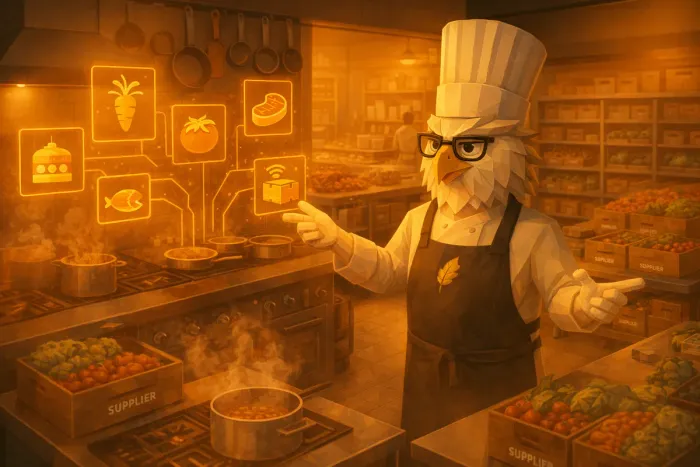
Today, that gap is closing.
AI is becoming practical for everyday restaurant operations. Instead of replacing chefs or managers, modern systems assist them by organizing information, automating repetitive work, and helping owners make better decisions about stock, purchasing, and menus.
For restaurant owners already juggling suppliers, inventory, staffing, and finances, this shift matters. AI can quietly remove operational friction so teams can focus more on food, guests, and service.
Why Small Restaurants Struggle with Operational Complexity
Running a restaurant involves dozens of small operational tasks that quickly add up:
- Tracking inventory and expiry dates
- Coordinating supplier orders
- Managing invoices and delivery confirmations
- Planning menus based on available ingredients
- Monitoring food costs and waste
Many kitchens still manage these processes through a combination of memory, notebooks, spreadsheets, and messaging apps. This works—until complexity grows.
When systems are fragmented, several problems appear:
- Over-ordering and food waste
- Ingredients expiring unnoticed
- Missed supplier discounts
- Limited visibility into actual food costs
- Extra administrative work at closing time
AI can help not by adding complexity, but by connecting these workflows into one system that supports the kitchen team.
How AI for Small Restaurants Works in Practice
The most useful restaurant AI tools focus on operational assistance rather than abstract automation. Instead of replacing decision-making, they provide better information at the right time.
Platforms like KitchenCrew apply AI directly to everyday kitchen workflows.
Smarter Inventory Awareness
Inventory tracking is one of the most common operational blind spots in small restaurants. Staff may know roughly what is in stock, but not always the precise quantities or upcoming expirations.
AI-supported systems can:
- track stock levels automatically
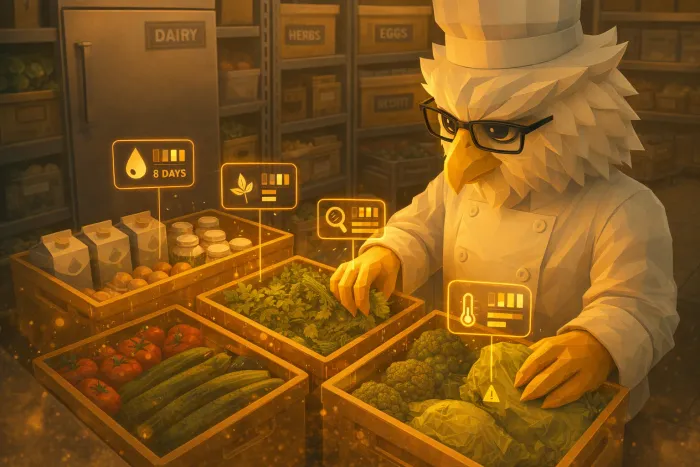
- highlight ingredients nearing expiry
- identify unusual usage patterns
- recommend reorder quantities
This improves purchasing accuracy and helps reduce unnecessary food waste.
Automated Supplier Coordination
Supplier ordering is another area where restaurants lose time and money. Orders are often sent by phone, email, or messaging apps, and comparing supplier prices can be tedious.
AI-powered platforms can centralize this process by:
- organizing supplier catalogs
- tracking order history
- identifying supplier discounts
- simplifying reorders
If you’re interested in how this works in detail, see our article on
a faster way to handle restaurant supplier ordering and track discounts.
By simplifying procurement, restaurant owners gain both cost visibility and operational consistency.
AI-Assisted Menu Planning
Menus are often designed around creativity and seasonality—but they are also tightly connected to inventory.
AI can help kitchens see relationships between:
- ingredients already in stock
- seasonal availability
- ingredient cost fluctuations
- historical dish performance
This allows chefs to plan menus that are both creative and operationally efficient.
Instead of discovering unused ingredients too late, the kitchen can adapt proactively.
Operational Insights Without Extra Work
Many restaurant owners want better analytics but do not have time to maintain reporting systems.
AI can automatically analyze operational data to highlight trends such as:
- rising ingredient costs
- frequently wasted items
- supplier reliability
- margin performance across dishes
The goal is not to overwhelm owners with dashboards but to surface insights that actually influence daily decisions.
From Tools to a Restaurant Operating System
One of the biggest challenges in hospitality technology is fragmentation. Restaurants often use separate tools for accounting, inventory, ordering, communication, and reporting.
This creates duplicated work and inconsistent data.
KitchenCrew is being developed as a connected operating system for restaurant operations, bringing together:
- inventory and expiry tracking
- supplier ordering
- menu planning
- operational analysis
- document organization
- communication with suppliers and teams
Rather than switching between multiple systems, restaurant owners can manage these workflows in one place.
The platform is currently in its pilot phase, where early restaurant partners help shape the system around real kitchen needs.
Why the AI Shift Matters Now
The current wave of AI tools is different from earlier restaurant technology for one simple reason: usability.
Instead of requiring complex setup or technical expertise, modern systems can integrate naturally into how kitchens already work. Chat-based interfaces, automated data capture, and smart recommendations reduce the barrier to adoption.
For small restaurants, this means the AI revolution is not about replacing people or transforming kitchens overnight. It is about gradually improving how everyday operational decisions are made.
Even small efficiency gains—better ordering, less waste, clearer cost visibility—compound quickly in a business with tight margins.
A Practical Next Step for Restaurant Owners
Restaurant owners who are curious about AI often ask the same question: Where should we start?
The most effective approach is to begin with operational areas that already create friction:
- inventory management
- supplier ordering
- food cost visibility
- document and reporting workflows
KitchenCrew is currently working with early restaurant partners to refine exactly these areas during its Pilot Phase.
If you are interested in exploring how AI can support your restaurant operations, you can join the pilot program or reach out to the team directly.
To learn more or request early access, contact:
Early participants help shape the platform while gaining access to new tools designed specifically for independent restaurants and growing hospitality groups.
The goal is simple: give restaurant owners clearer insight, smoother operations, and more time to focus on what matters most—the food and the guest experience.
Written by
Kitchen Crew
Tips and guides for kitchens that would rather cook than write supplier emails.
Related Articles
You might also find these useful

A Faster Way to Handle Restaurant Supplier Ordering and Track Discounts
Restaurant owners can save hours each week by simplifying supplier ordering and tracking discounts across vendors in one place.

Restaurant Closing Automation: How Automated Emails and Document Storage Simplify End‑of‑Day Operations
Learn how restaurant closing automation reduces paperwork, speeds up day‑period closing, and keeps documents organized using KitchenCrew.