
Manual Restaurant Ordering Problems
Many restaurants run sophisticated dining experiences for guests, but behind the scenes, their food ordering process is surprisingly manual. Spreadsheets, handwritten notes, WhatsApp messages to suppliers, and a chef’s memory often form the backbone of daily ordering decisions.
This system can work when the team is small and the menu is stable. But as operations grow more complex, manual restaurant ordering begins to introduce friction everywhere: missed items, duplicated orders, last‑minute ingredient shortages, and hours of administrative work that pull staff away from the kitchen.
For restaurant owners and kitchen managers, these restaurant inventory problems are often accepted as “part of the job.” In reality, they are signs of operational systems that have not kept pace with modern hospitality operations.
The Hidden Complexity of Restaurant Ordering
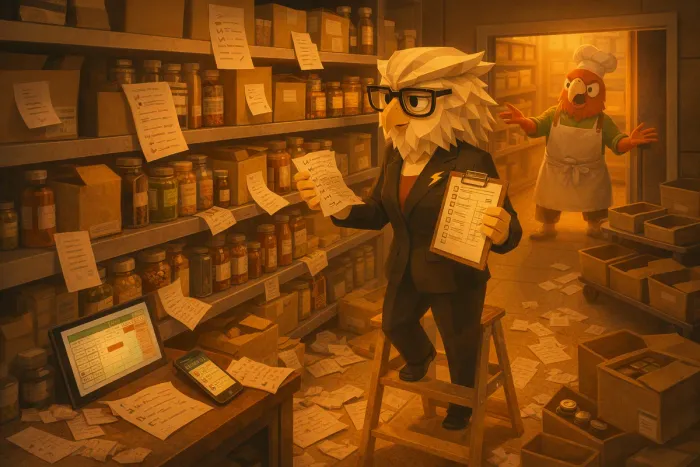
Ordering ingredients sounds simple: check what’s missing and reorder it. In practice, the food ordering process inside a busy restaurant involves many moving parts.
A typical kitchen may deal with:
- Multiple suppliers delivering on different days
- Fresh products with short expiry windows
- Daily menu changes based on availability
- Unpredictable demand during peak service
- Staff rotating across shifts
Without a centralized system, these variables are managed across scattered tools and human memory.
One manager might maintain a spreadsheet. Another might keep handwritten stock lists in a binder. A chef might send urgent WhatsApp messages to a supplier during prep. Meanwhile, invoices and delivery confirmations live somewhere else entirely.
Individually, each method feels manageable. Together, they create operational fragmentation.
How Manual Restaurant Ordering Creates Daily Chaos
The biggest issue with manual restaurant ordering is not that it fails completely. It’s that it fails in small ways, every day.
Those small failures accumulate into operational chaos.
Missed Items During Ordering
When ordering relies on quick visual checks or handwritten notes, it’s easy to overlook something. A half‑empty container in the walk‑in might look “fine for now,” only to run out during evening service.
The result: rushed last‑minute supplier calls, emergency store runs, or menu substitutions that frustrate both staff and guests.
Double Orders and Over‑Stocking
Without a shared system, two people may order the same item without realizing it.
For example:
- A sous chef places an order in the morning
- The kitchen manager orders again later from the spreadsheet
- The supplier delivers both orders the next day
Suddenly the restaurant is sitting on excess perishables that must be used quickly or thrown away. These restaurant inventory problems quietly erode margins.
Time Lost to Manual Tracking
A large portion of hospitality operations is still administrative.
Staff spend time:
- checking shelves manually
- comparing invoices to delivery notes
- updating spreadsheets
- messaging suppliers for confirmations
- chasing missing orders
This work rarely shows up in financial reports, but it consumes hours every week.
More importantly, it pulls experienced kitchen staff away from the work they were hired to do: cooking, planning menus, and running service.
Reactive Instead of Proactive Kitchens
When stock tracking is manual, kitchens operate reactively.
Decisions are made based on:
- incomplete stock visibility
- rough estimates of usage
- guesswork about upcoming demand
This creates a constant feeling of being slightly behind. Instead of planning ahead, the team is always responding to problems that appear during service.
Why These Systems Persist in Hospitality
Despite the obvious friction, many restaurants still rely on manual restaurant ordering systems.
There are a few reasons for this.
First, these workflows evolved gradually. A spreadsheet gets added when the business grows. A WhatsApp group starts for quick supplier communication. A clipboard appears in the stockroom.
Over time, these tools become “the way things are done.”
Second, many operators assume digital systems will be complicated or disruptive to implement. Kitchens are fast environments, and anything that slows service feels risky.
Finally, hospitality has historically lacked tools designed specifically for real kitchen workflows. Generic software often fails to match how chefs and managers actually work.
The result is an industry where operational processes remain far more manual than they need to be.
How Restaurant Ordering Software Changes the Process
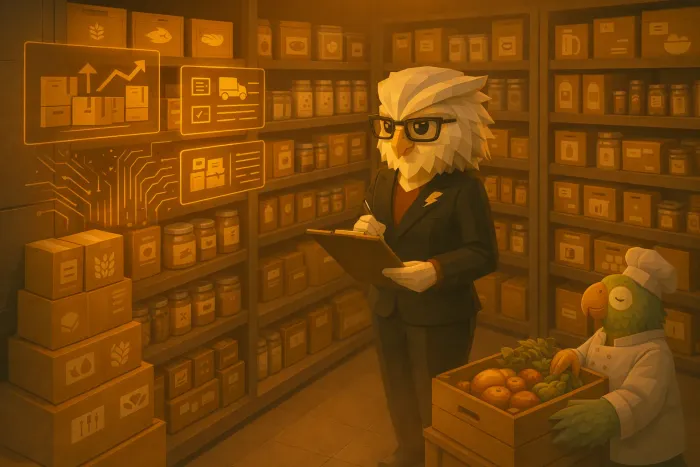
Modern restaurant ordering software is emerging as a response to this long‑standing gap in hospitality operations.
Instead of scattered tools, it connects several workflows into one system:
- inventory tracking
- supplier ordering
- stock usage monitoring
- delivery confirmations
- operational insights
The key benefit is visibility.
When kitchen teams can see accurate stock levels and upcoming deliveries in one place, the food ordering process becomes structured rather than reactive.
Orders can be placed based on real usage patterns. Expiry dates can be monitored before food goes to waste. Suppliers can be coordinated without long message chains or guesswork.
KitchenCrew was designed around this idea: that kitchens should spend less time managing spreadsheets and more time running the operation itself. The platform connects stock tracking, ordering, and supplier coordination so teams can move away from fragmented workflows.
If you’re curious how ordering systems can streamline supplier coordination specifically, this article explores it in detail: /blog/a-faster-way-to-handle-restaurant-supplier-ordering-and-track-discounts.
The Real Opportunity: Calm, Predictable Kitchen Operations
The goal of better systems is not simply “more technology.”
It’s calmer operations.
When ordering, inventory, and supplier communication are structured, kitchens gain predictability. Staff know what is in stock, what is arriving, and what needs to be ordered.
Instead of reacting to shortages during service, teams can plan menus and prep with confidence.
For many restaurants, the shift from manual restaurant ordering to structured restaurant ordering software is less about adopting a new tool and more about removing a daily source of operational stress.
And in a business where margins are tight and time is limited, that shift can make an enormous difference.
Written by
Aurum Avis Labs
Tips and guides for kitchens that would rather cook than write supplier emails.
Related Articles
You might also find these useful
A Faster Way to Handle Restaurant Supplier Ordering and Track Discounts
Restaurant owners can save hours each week by simplifying supplier ordering and tracking discounts across vendors in one place.

How Ivy Simplifies Restaurant Supplier Management and Ordering Setup
Ivy automates restaurant supplier management: organized items, drafted supplier emails, less after-hours admin for kitchen teams.