
What Modern Restaurant Inventory Software Should Actually Do
Restaurant operators rarely struggle because they lack data. The real problem is fragmented information spread across spreadsheets, supplier emails, notebooks, and POS reports. Modern restaurant inventory software aims to solve that fragmentation by bringing stock visibility, purchasing, and kitchen decision‑making into one connected system.
But not every system delivers the same level of operational clarity. For restaurant owners, operations managers, and buyers evaluating new tools, it helps to understand what capabilities truly define the best restaurant inventory system today.
Below are the core capabilities modern platforms should provide—and the practical impact each one has on daily kitchen operations.
Real-Time Stock Visibility Across the Kitchen

At the heart of any inventory software for restaurants is a clear and reliable view of stock.
Many restaurants still rely on manual counts recorded in spreadsheets or on paper sheets. While this approach works at small scale, it quickly breaks down as menu complexity, suppliers, and locations increase.
Modern restaurant stock tracking systems should provide:
- A single dashboard showing current ingredient levels
- Location-based stock visibility (kitchen, bar, storage, or multiple sites)
- Automatic adjustments based on sales or recipe usage
- Alerts when items approach minimum stock thresholds
The goal is simple: remove uncertainty. When chefs and buyers can instantly see what is available, they make faster and more accurate decisions about purchasing, prep, and menu availability.
For operations teams, this also improves forecasting and reduces emergency supplier orders—which are often the most expensive.
Expiry Monitoring That Reduces Food Waste
One of the most overlooked features in hospitality inventory management is expiry tracking.
Perishable ingredients move quickly through a kitchen, and without proper monitoring, products often expire before they are used. This creates unnecessary waste and erodes margins.
A strong restaurant inventory software platform should:
- Track expiry dates at the ingredient level
- Highlight items nearing expiration
- Suggest priority usage in recipes or specials
- Provide reporting on waste patterns
This is where inventory systems start connecting directly with kitchen decision‑making. Instead of discovering spoilage too late, teams can proactively design daily specials or adjust prep plans based on what needs to be used first.
The result is a kitchen that runs leaner without sacrificing menu quality.
Supplier Ordering Built Into Inventory Workflows
Ordering ingredients is one of the most repetitive administrative tasks in restaurant operations. Yet in many businesses it still happens across scattered emails, phone calls, and supplier portals.
The best restaurant inventory system integrates supplier ordering directly into the stock workflow.
Key capabilities include:
- Creating supplier orders from low-stock alerts
- Maintaining supplier catalogs and pricing history
- Tracking delivery status and discrepancies
- Recording discounts and negotiated terms
By tying purchasing directly to restaurant stock tracking, teams eliminate duplicate work. Instead of counting stock in one tool and placing orders in another, the process becomes continuous and traceable.
For multi-location groups, this also provides visibility into supplier performance and purchasing trends across sites.
If you want a deeper look at how ordering automation works in practice, the article at /blog/a-faster-way-to-handle-restaurant-supplier-ordering-and-track-discounts explores the operational side of this shift.
Chat-Based Interaction With Inventory Systems
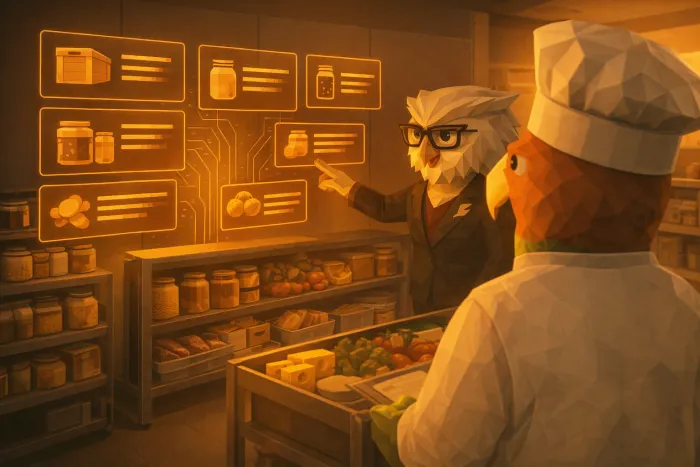
A newer capability emerging in advanced inventory software for restaurants is conversational or chat-based interaction.
Instead of navigating complex dashboards, staff can interact with inventory using simple prompts or commands, such as:
- “What ingredients are running low today?”
- “Create an order for tomorrow’s vegetable delivery.”
- “Show items expiring this week.”
This approach reduces training requirements and makes inventory data accessible to more members of the team—not just managers or administrators.
For busy kitchens where time is limited, conversational interfaces can dramatically reduce friction in day-to-day tasks.
Integration With Menu Planning and Recipe Management
Perhaps the most important shift in modern hospitality inventory management is the connection between inventory and menu planning.
Traditional systems treat these as separate domains. Inventory tracks ingredients; chefs manage menus independently. But in reality, these decisions constantly influence each other.
A modern platform should connect:
- Recipe ingredient requirements
- Current inventory levels
- Supplier availability
- Seasonal menu planning
When these systems work together, kitchens gain a much clearer operational picture.
For example, chefs can:
- Design menus that align with current stock levels
- Adjust recipes based on supplier availability
- Plan specials that use ingredients nearing expiry
This creates a feedback loop between purchasing, storage, and menu design that reduces waste while protecting margins.
If menu planning is a priority in your evaluation, the guide at /blog/ai-menu-planning-for-restaurants-how-chefcook-helps-chefs-create-smarter-menus explores how modern tools are starting to support chefs in this process.
Choosing the Right Restaurant Inventory Software
When evaluating restaurant inventory software, it helps to look beyond basic stock counting features. The most effective systems operate as an operational layer connecting inventory, suppliers, and menu decisions.
At minimum, decision‑makers should expect:
- Real-time restaurant stock tracking across locations
- Automated expiry monitoring and waste visibility
- Integrated supplier ordering and purchasing history
- Simple interfaces that reduce staff training requirements
- Strong integration with recipes and menu planning
Tools that combine these capabilities allow restaurant teams to shift from reactive inventory management to proactive operational control.
As AI and automation continue entering hospitality, inventory platforms are also becoming broader operational assistants. Articles like /blog/ai-for-small-restaurants-practical-ways-to-benefit-from-the-ai-revolution highlight how these technologies are beginning to reshape everyday restaurant workflows.
For owners and operations leaders, the takeaway is straightforward: inventory systems are no longer just stock trackers. The best platforms now function as decision-support tools that help kitchens run more efficiently, reduce waste, and maintain better control over margins.
Written by
Aurum Avis Labs
Tips and guides for kitchens that would rather cook than write supplier emails.
Related Articles
You might also find these useful

AI Menu Planning for Restaurants: How ChefCook Helps Chefs Create Smarter Menus
Discover how ChefCook assists chefs with creative menu planning using past specials, bestsellers, and AI-powered brainstorming.
A Faster Way to Handle Restaurant Supplier Ordering and Track Discounts
Restaurant owners can save hours each week by simplifying supplier ordering and tracking discounts across vendors in one place.
AI for Small Restaurants: Practical Wins
AI for small restaurants without enterprise suites: ordering drafts, inventory workflow, menu ideas. Practical steps—and where KitchenCrew fits for Swiss teams.